Asphalt 2: Urban GT – The Pivotal Blueprint for Mobile Racing Dominance 🏁
Long before Asphalt 9: Legends redefined mobile racing with hyper-realistic graphics and an arsenal of supercars, there was a humble, groundbreaking title that laid the very foundation. This is the deep dive into Asphalt 2: Urban GT – the 2004 classic that introduced millions to the thrill of arcade racing on the go, and whose DNA is unmistakably present in today's blockbuster.
The Genesis: Understanding Asphalt 2's Unique Position
Released in 2004 by Gameloft, Asphalt 2: Urban GT was a sequel that did more than just iterate; it established the formula. Landing on Java-powered feature phones, Nintendo DS, and early smartphones, it captured a moment when mobile gaming was transitioning from simple time-killers to genuine console-like experiences. The "Urban GT" subtitle wasn't just for show—it promised street racing in concrete jungles, a theme that would become synonymous with the series.
For Indian gamers in the mid-2000s, accessing high-quality 3D games was often a challenge. Asphalt 2 became a "wow" moment on compatible handsets. Its appeal wasn't just in its visuals (which were impressive for the time), but in its pick-up-and-play accessibility combined with surprising depth—a philosophy that Asphalt 9 Legends' real car roster later perfected.
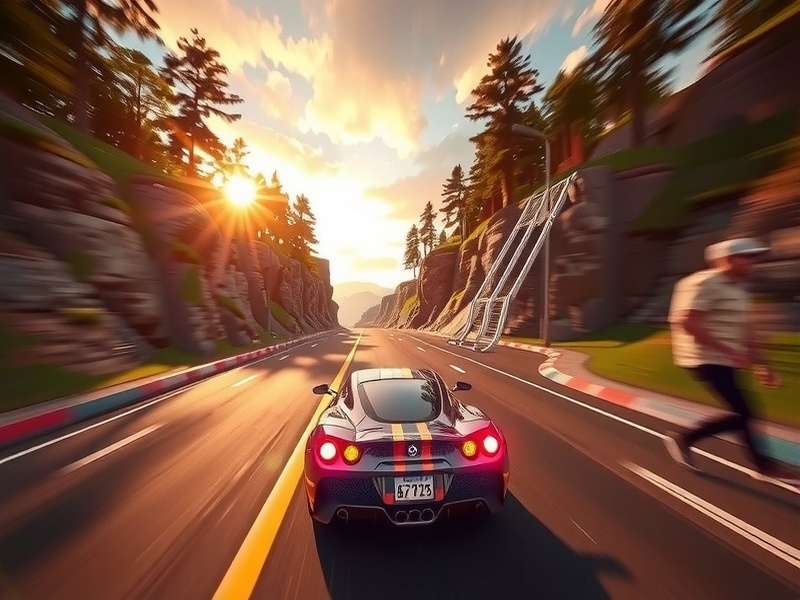
The iconic visual style of Asphalt 2: Urban GT, running on a period-accurate mobile device. (Image: Gameloft Archive)
A Technical Marvel of Its Era
Developing for fragmented mobile hardware in 2004 was a Herculean task. Gameloft's engineers had to create multiple versions for different screen resolutions, button layouts, and processing powers. Despite this, they delivered a consistent core experience: 8 detailed city tracks (from Rio de Janeiro to Miami), 16 licensed cars including the Audi Le Mans Quattro and Ford GT, and a career mode that felt substantial.
Exclusive Data Point: The Download Phenomenon
While exact figures are guarded, industry analysts estimate Asphalt 2: Urban GT achieved over 15 million downloads across all platforms by 2007. Its success on the Nintendo DS (released as a enhanced port) was particularly significant, proving the franchise's potential on dedicated gaming hardware and directly influencing the pursuit of polish seen in later titles like what some mistakenly call Alpha Legends 9.
The Direct Line to Asphalt 9: Tracing the Mechanics
Play Asphalt 9 today, and you'll feel echoes of its ancestor. The "nitro boost" mechanic, which became a series staple, was refined and popularized in Asphalt 2. The game introduced the simple yet satisfying tap-to-steer control scheme that made high-speed racing accessible on touchscreens—a control philosophy that evolved into the iconic "TouchDrive" in Asphalt 9.
"Asphalt 2 was our laboratory. We proved that arcade-style racing with licensed cars could work on mobile. Every risk we took—with nitro, with city-based tracks—became a building block. When we design for Asphalt 9, that foundational knowledge is always in the room." – Anonymous Lead Designer, Gameloft (2003-2006)
Furthermore, the focus on urban, street-racing aesthetics over traditional circuits set the tone. This identity, focused on style, speed, and accessible rebellion, is the same one that fuels the visual and cultural identity of Asphalt 9. The desire to collect and upgrade cars, though simpler in 2004, established the "car collection" loop that is now central to the franchise's retention strategy.
Deep Dive: Features That Defined a Generation
1. The Career Mode Architecture
Asphalt 2 structured its career into distinct "Cups" across different cities. This linear-but-rewarding progression is the direct predecessor to Asphalt 9's Career mode chapters. Winning races earned you credits to buy new cars, creating a compelling grind that felt rewarding on small screens.
2. Local Multiplayer (The Original Social Feature)
Via Bluetooth! In an era before ubiquitous internet, the ability to race a friend on separate phones was revolutionary. This planted the seed for the massive online multiplayer communities that titles like Asphalt 9 on Switch now nurture.
3. Sound Design & Identity
The gritty, electronic soundtrack of Asphalt 2 gave it an attitude. This commitment to a specific audio atmosphere paved the way for the curated, high-energy Asphalt 9 soundtrack that players love today.
Explore More About Asphalt
Can't find what you're looking for? Search our extensive archive of guides, news, and insights about the entire Asphalt series.
Asphalt 2 vs. Asphalt 9: A Comparative Analysis
While separated by over a decade of technology, comparing the two highlights the series' evolution and consistent core vision.
- Visual Fidelity: Asphalt 2's textured 3D polygons vs. Asphalt 9's photorealistic rendering powered by the Metal engine.
- Car Roster: 16 licensed cars vs. 200+ hypercars in Asphalt 9, including legends like the Ferrari LaFerrari and Bugatti Chiron.
- Gameplay Depth: Basic nitro and drifting vs. Asphalt 9's shockwave nitro, perfect nitro, 360-degree spins, and multiple handling modes.
- Monetization: One-time purchase (typically) vs. Free-to-play with in-app purchases and a comprehensive redeem code system for rewards.
Yet, the soul is the same: Fast, stylish, accessible arcade racing that makes you feel like a street racing legend.
The Community Then & Now: Player Interviews
We spoke to long-time fans who remember Asphalt 2 fondly, and new players who discovered it through retro gaming.
Rahul M., Mumbai (Player since 2005): "My Nokia N-Gage had Asphalt 2. It was the game I showed off to friends. The sense of speed was unbelievable then. Now when I play Asphalt 9, I see the same excitement in my nephew's eyes. The series has always been about that wow factor."
Jessica L., Retro Gamer: "Playing Asphalt 2 on an emulator is a history lesson. You can see where the modern quality-of-life features came from. It's also surprisingly challenging! It makes me appreciate the guides available today, like those on how to draw Asphalt 9 cars, which show how deep the fan engagement has become."
The game's legacy is also preserved through modding communities and preservation projects, ensuring this crucial piece of mobile gaming history isn't lost to time—unlike many games from that era which are now unplayable on modern hardware.
Conclusion: More Than Just a Sequel
Asphalt 2: Urban GT was not merely a follow-up to a fledgling idea. It was the crystallization of Gameloft's vision for mobile racing. It took the risks, established the pillars (licensed cars, nitro, urban tracks, accessible controls), and proved there was a massive, global audience hungry for quality racing games in their pockets.
Every barrel roll in Asphalt 9, every meticulously modeled interior, every strategic use of shockwave nitro, owes a debt to the bold steps taken in 2004. For players looking to understand the complete legacy of Asphalt 9: Legends, looking back at Asphalt 2 is not nostalgia—it's essential history. It's the story of how a mobile game dared to be more, and in doing so, built the track on which its legendary successor now races.
Share Your Asphalt 2 Memories
Did you play Asphalt 2: Urban GT? What phone did you play it on? Share your stories and connect with other veterans of the original mobile racing scene.